Two coordinating scrapbook papers
Connect a bold repeat with a quieter companion.
Design a pair of papers that coordinate without being identical: one lively repeat and one quieter companion. Shared colors and related shapes are enough to connect them.
A result you can build toward
These are actual outputs of the studio’s drawing and repeat functions. They are reference compositions, not screenshots of physical products. Your hand-drawn marks will vary.
Download the reference tile ↓The download is the first example’s repeating unit, not the full preview. It opens in SVG-compatible applications; the studio does not import files.
A coordinating paper pair
This digital composition is assembled from the reference artwork. It demonstrates the next layout step; it is not a photograph or a physical production test.
Download the layout study SVG ↓01 / Set up your drawing
For the first paper, use Flower stamps in #BD704E, small Pen marks in #345B45, and background #F4EBDC. Start with offset 50%, scale 80%, and Pattern rotation 0°. Use Flower size 26 with smaller accent strokes at size 5.
02 / Make the example
Build three loose flower groups and inspect the preview for a balanced spread. Export this paper before starting another drawing. Clear Canvas retains your colors and sliders, which is useful here. For the companion, use only a few small Dots or short strokes in the same green. Leave more empty paper and export a second file.
03 / Compare and refine
Assemble each tile into a page of your chosen size in a layout application. Test the pair side by side, then place a sample photo rectangle over each. The quieter paper should support a photograph or journaling panel rather than compete with it. You can also change the background brightness slightly while keeping one shared ink.
If the result feels off
If both papers demand equal attention, simplify the companion before changing every color. If they feel unrelated, repeat one recognizable ink or mark shape. Do not rely on shrinking a dense pattern alone: many tiny motifs can still produce a busy texture. Preserve the exported tile ratio when building the final page, especially for staggered rows.
Check the finished file
Print small swatches before making full sheets, and compare them under the light where the album will be used. Paper and ink suitability for long-term photo storage depend on the materials; this digital guide does not establish archival safety. Keep both tile exports and the assembled pages. Browser storage holds only the current drawing, so clearing one design is safe only after you have downloaded what you need.
Visual inspiration
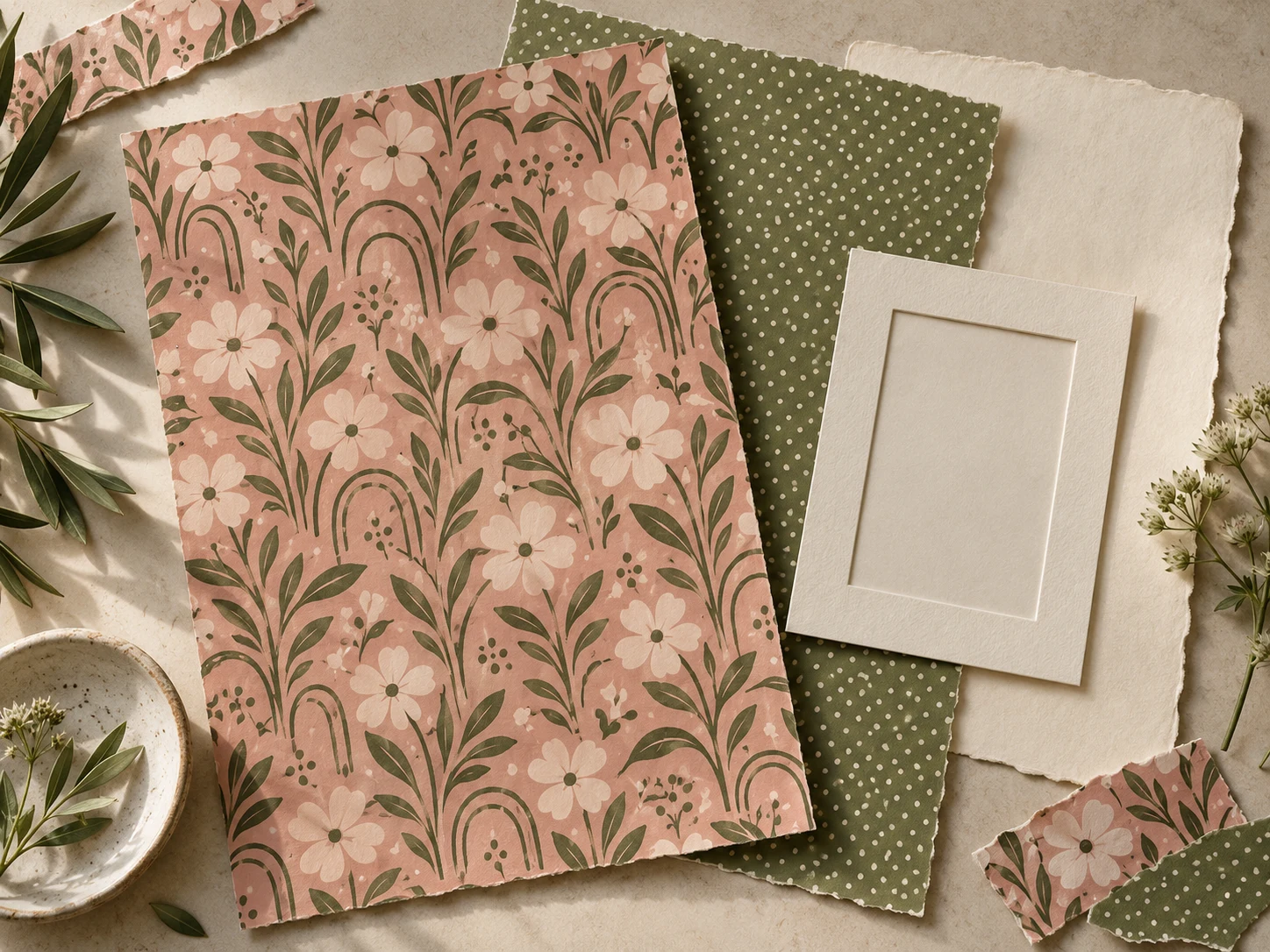
This AI-generated editorial image is a separate styling idea. Follow the studio-rendered examples above for achievable tool output. Physical materials and printing need your own tests.